
When wasn't the Supreme Court in a legitimacy crisis?
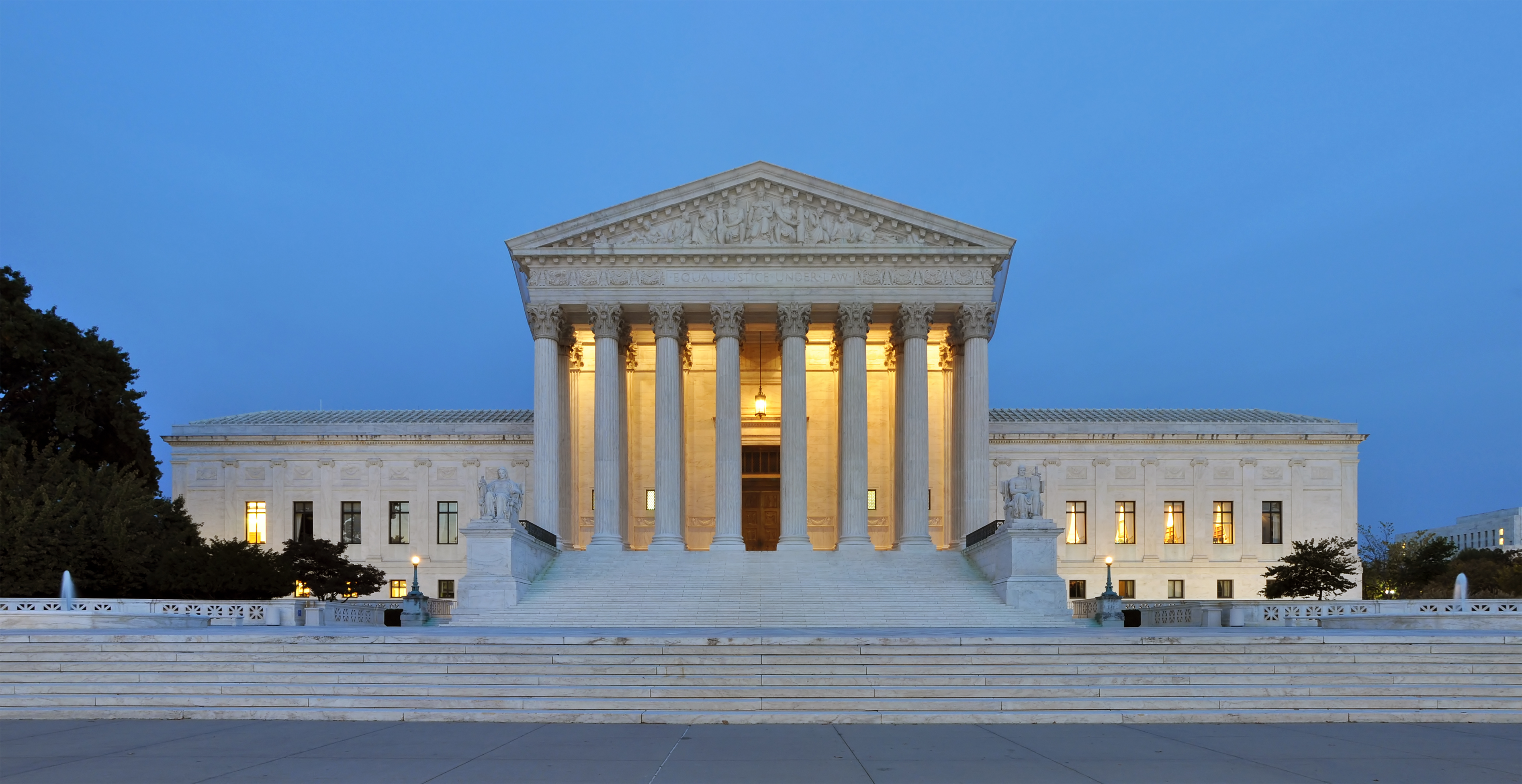
I’m a bit frustrated with the current discourse around the failings of the Supreme Court. I try quite hard to not be the kind of person that says, things were always bad, why is everyone just coming around to it now?, but the Supreme Court has been in a legitimacy crisis for as long as I’ve been alive.
Particularly when it comes to the mystique of authority that surrounds the Court, there is a persistant sense that these political appointees are in some way non-political. It’s simply not true and our institutions: journalists, politicians, etc. are just falling for the rhetoric of impartiality invented by the legal profession.
Since the activist courts claimed the power of judicial review in the 1800’s, there has always been both a strong incentive to appoint ideological justices that can wield immense power to shape our laws from the bench.
When the court chose the president
When I think about a legitimacy crisis, I can’t help but think of the 2000 election and the decision in Bush v. Gore. At the time I was only three, but in retrospect I find it insane that this election was not a turning point that radicalized vast swaths of the country.
I’ve read the decision many times in various philosophy of law classes, and while I don’t purport to be a constitutional lawyer, I am an expert at bullshitting an argument to reach a conclusion that I like. That is exactly what this decision did.
An unelected body just decided an election by fiat. It blows my mind every time I think of it. It’s insane to me that we’ve continued to pretend that Supreme Court Justices were not political from that point on.
And this is just a single example of the court taking the law into their own hands. This kind of decision has been a prominent feature of the court since its inception.
Judicial review of our rights based constitution
From the beginning the Supreme Court has held an enormous amount of power. Unlike a procedural constitution like that of other stable democracies, the US Constitution is a statement of values, particularly in the Bill of Rights.
This leaves open the possibility for rights and privileges to be read into the constitution and the legality of potential laws to be decided on the basis of moral principles rather than procedural fairness.
You could imagine a court that makes decisions on whether congressional voting procedure was followed, or if the public was given adequate time to review and comment on a law, or if voting laws were followed. Mainly procedural questions.
While I’m aware this is a huge point, for the moment I’ll set aside the problems of political representation and our electoral system…
Still, even if a rightfully elected legislature follows every rule when creating laws, the morality of the law can be interpreted to contradict the morality of the constitution. Rather than a group that calls balls and strikes, the Supreme Court is a group that interprets the moral framework of a document written over 200 years ago and applies it to current laws.
At least that’s the idea. More often the Justices come to a case with their own moral values and create the thinnest version of legitimacy for that decision with some bad historical analysis and questionable reading comprehension. I would love for them to once acknowledge the “well regulated militia” part of the Second Amendment.
Where is the progressive reform?
While the history of the supreme court has had many progressive victories that have improved the lives of millions of Americans and secured rights for marginalized groups, it seems to me that the Republican party is the most recent to realize the long lasting power of judicial review.
The explicit goal of appointing judges that would overturn rulings that Republicans disagree with would seem outside the realm of normal procedure for Democrats. The Democratic party still sees the Supreme Court as an impartial arbiter of the law.
This antiquated reading of the process has resulted in a failure to act in accordance with the gravity of the situation. A young, ideological, Republican on the court will do more to influence future policy than any President.
All of this is to say that Democrats, both voters and elected members, have for too long pretended that norms matter. In a system where rural voters are favored electorally, and Republicans don’t have to answer to the voices of a majority of Americans, norms should not be a constraint on the power of any political party. This is a new equilibrium where structural power is necessary and should be the ultimate goal of progressive politics.
What that means going forward is that progressives, especially elected progressives need to think more in the context of power rather than norms. Kindness and cooperation continue to be a myth in Washington that results in getting burned.
When it comes to the courts specifically, I think it’s time for real reforms. Expand the court to water down the power of individual justices, establish term limits, and appoint unabashed progressive justices.
These are just a start and don’t address the fundamental problem of an unelected group of lawyers pretending to do literary analysis to back into ideological decisions. Reform to that degree would entail an entire re-thinking of the way we work with and think about the Constitution. Which might be necessary in our era of polarization.