
Ballots are too long and it’s bad for democracy
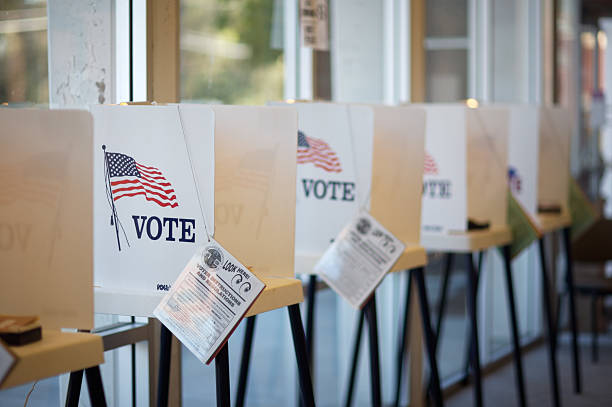
While billions of dollars will be spent at the federal level this election cycle, much less attention is paid to down ballot races. On my ballot in Chicago, there are around fifty different elections that I have to make a decision about.
These down ballot races are extremely important and have huge impacts on the lives of individual voters. These are the people that set local policy and in many states and municipalities across the country voters are asked to elect judges who have a very direct impact on the lives of every person in their district.
But we’re not making informed decisions in every judicial election, which are often presented as non-partisan. We’re just using shortcut heuristics, snap judgements, and name recognition. Because of this, the system isn’t ingesting a true reflection of the voters interests and distorts our judicial system towards a sclerotic status-quo. This system needs to change.
Why do elections?
It may seem straightforward, but I want to start by attempting to articulate why we run elections in the first place. In our representative system the goal of an election is to determine the preferences of voters. We do that by electing individuals that we feel represent those preferences.
Those people we elect then go on to make a bunch of individual decisions, from passing laws to signing treaties, and they are then meant to be accountable to those voters they represent. If we don’t like what they did, we can vote them out next time.
Ideally, every voter would know everything about every politician they are electing. But in reality, we just don’t have the time for that. We rely on short-cuts. Is this person part of the same party I identify with? Does my neighbor have their sign in the yard, and do I like that neighbor? Do I like the way they talk? Best case, what do they think about this single big issue that I do pay attention to?
We know way more about parties than we do about individual politicians. Especially in a polarized environment, there is a wide gap between the two major parties, so generally we can just vote straight ticket since our preferences will lie closer to one than the other and that works well enough.
So why judges?
What about Judges? Why are they elected? And why are they often stripped of party affiliation resulting in no heuristic to help my decision making?
And why do I have to make that decision 100 times?
When you ask judicial observers and even judges themselves, there is pretty ferocious disagreement. Experts generally agree that the goal of selecting judges is independence and accountability, there is just disagreement as to whether elections are the best way to achieve that goal, or if appointments are better. They make arguments about campaign finance, quid-pro quo, and the insider biases of both elections and appointments.
There’s even the whole realm of outcomes related to this procedural choice. Research has observed that elected judges tend to be more punitive than appointed judges. That seems bad by itself, but I’m not going to focus on that here.
Instead, I believe the process of electing judges, and the fact that it requires us to make so many decisions on the ballot is an inherent problem without even considering systemic outcomes.
Ballot burnout and its effects
In my job as a survey researcher it’s a constant battle to shorten our survey tools for clients. They want to ask fifty questions in a survey that would take a thoughtful respondent half an hour but the reality is that no one thoughtfully fills out a fifty question survey.
They might get through 10 minutes of questions then they start phoning it in. They’ll start straightlining, which is just selecting the option in the same position for every question, or they’ll start putting gibberish for open ended text response questions or, most likely, they just won’t finish the survey at all.
And that’s not just the case for market research. It turns out that we have about as much patience for our ballots as we do for a survey about McDonald’s.
The research bears this out. In Illinois the ballot is ranked by who had the most signatures when applying to be on the ballot in the first place. Campaigns put in a lot of effort getting those signatures so they can be first in the list of candidates because there is a chance that they will be picked more often just because of their position in the list.
As much as candidates make a big deal about ordering effects on ballots, the idea that it’s best to be the candidate listed first, that effect is actually quite small. It only really becomes a problem when the ballot is extremely long. Then that ordering effect is magnified. People get exhausted by choices and just start choosing the top option.
More generally, we see that longer ballots create fatigue leading to voters making decisions based on short-hand heuristics. They’ll just choose the first name listed, or support the status quo by voting for the incumbent (or in judicial elections just choosing to retain every judge) or simply not voting at all in down ballot races.
This is all exacerbated in judicial elections where voter information is extremely low. The vast majority of people going into the voting booth will not recognize a single name listed under judicial elections. Especially when the judges do not or can not identify with a party and you’re just staring at a list of names you’ve never seen before and asking to decide if any of them should be in charge of changing the lives of thousands of people.
Some people just outsource the decision
Even with vote-by-mail peaking in 2020, about (50% of voters do so in-person on election day)[https://electionlab.mit.edu/research/voting-mail-and-absentee-voting]. The problems of quick decision making and barriers to researching candidates are exacerbated when voting in person. We essentially require individuals to do pre-research and come to their polling place with some kind of written guide.
The best case scenario is abdicating the responsibility of voter education to third party organizations and voter guides, but this is not going to be universal and only applies to the most engaged voters.
In Chicago we have a radical progressive voter guide called Girl, I Guess. It’s an extremely comprehensive review of candidate positions all the way down the ballot in every district in Chicago. They spend the time reviewing every elected position, except judges. They skip over the judges and simply recommend a retention or not because the volume of judges is just so large. Even they decided that there are too many judges to detail, but individual voters are expected to make an informed decision.
Essentially we’ve decided to leave judicial elections up to random chance or name recognition based on who spent the most amount of money on lawn signs. This clearly doesn’t fulfill our goals of having an elected slate of representatives that reflects the preferences of voters.
Reduce the length of the ballot
The simple answer is to reduce the length of ballots and an easy first step is to end judicial elections. I’m not even saying that appointments are better, but it’s clear from the research on ballot effects that people aren’t making informed decisions anyway.
You can argue about the effects of elections vs. appointments, but in the instance of appointments there is someone who was elected in a high-information environment attempting to represent the will of their constituents rather than an almost random choice.